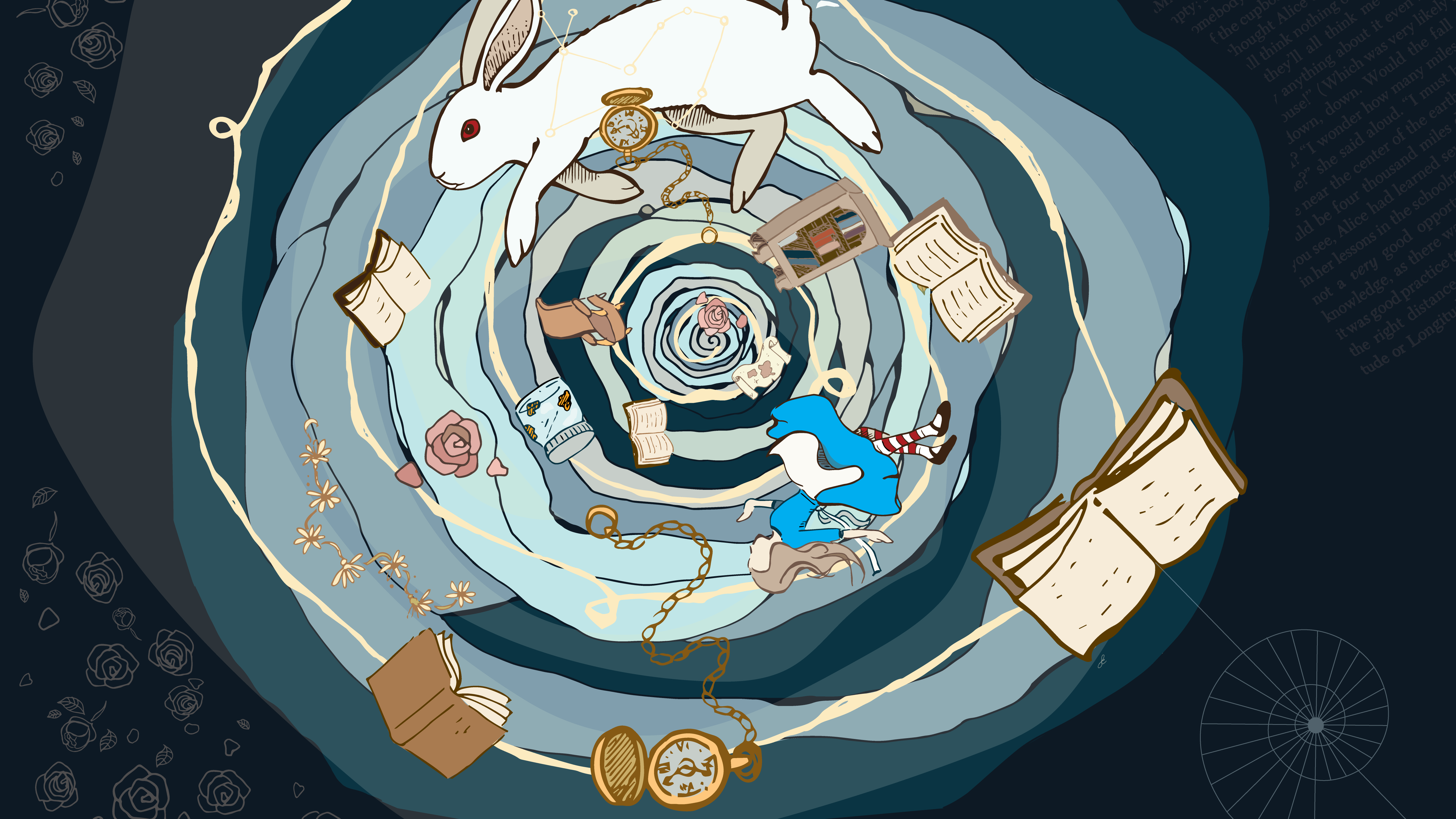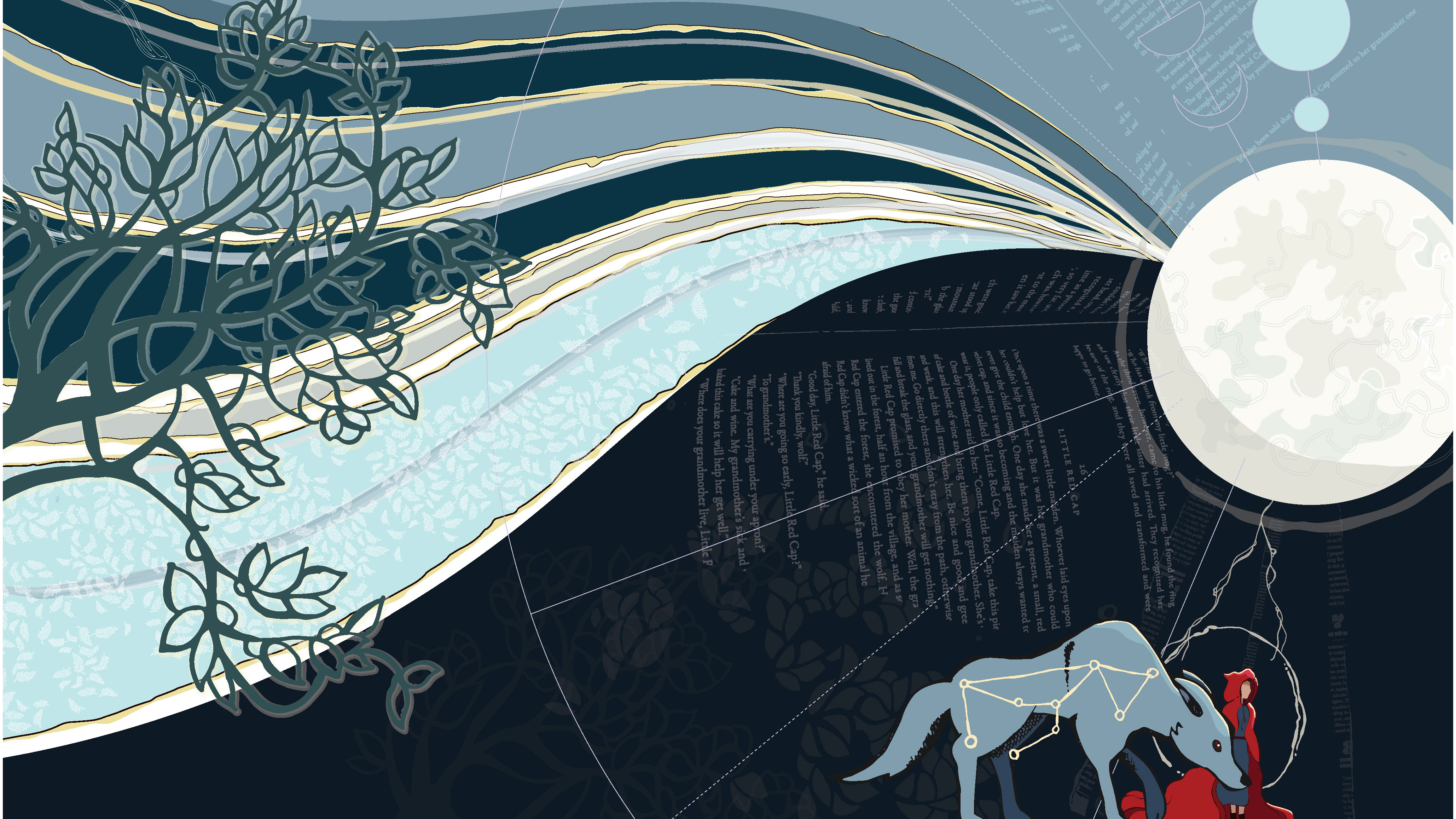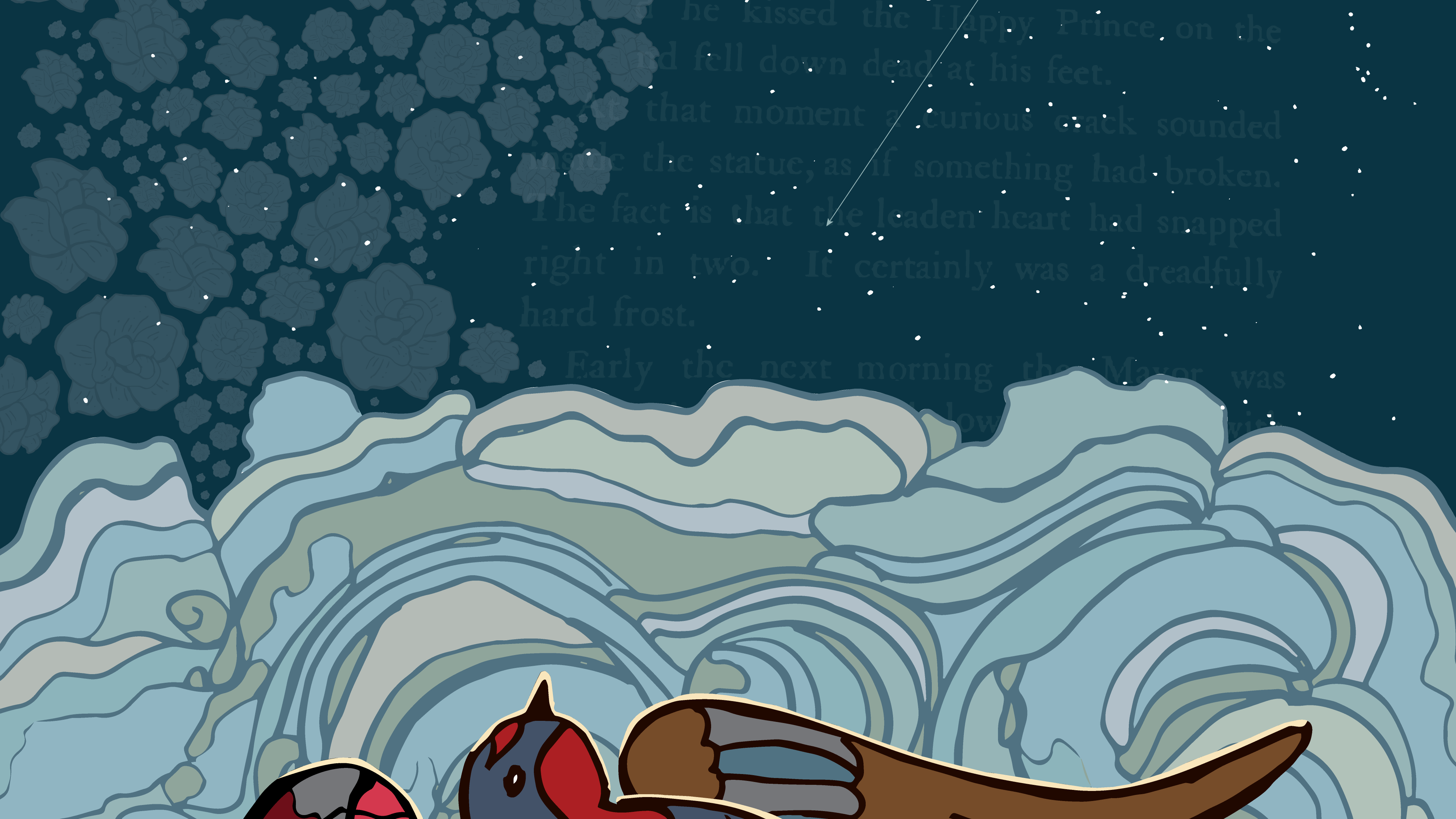
Storytelling and narration have been foundations in my life, and I never recognized it until recently:
My father used to tell me stories at bedtime. I fell into books like getting sucked into a vortex. I often hid(hide) from reality in the imaginations of my mind. I read books to my kids before bed, and it has become a connection between us as we navigate the lives of fictional characters together.
Like Jonathan Gottschall wrote in the book The Storytelling Animal, How Stories Make Us Human, “Humans live in landscapes of make-believe. We spin fantasies. We devour novels, films, and plays.” The word “devour” makes me think that we need storytelling as much as we need sustenance.
In this art series called “Narrative”, I have chosen 5 stories that stood out to me in childhood, and in my children’s lives as well. Certain imageries which were crafted by words are still in my mind today. They have shaped the way I interpret the world. I hope you enjoy the readings associated with the drawings I have come up with, because the two go hand in hand.
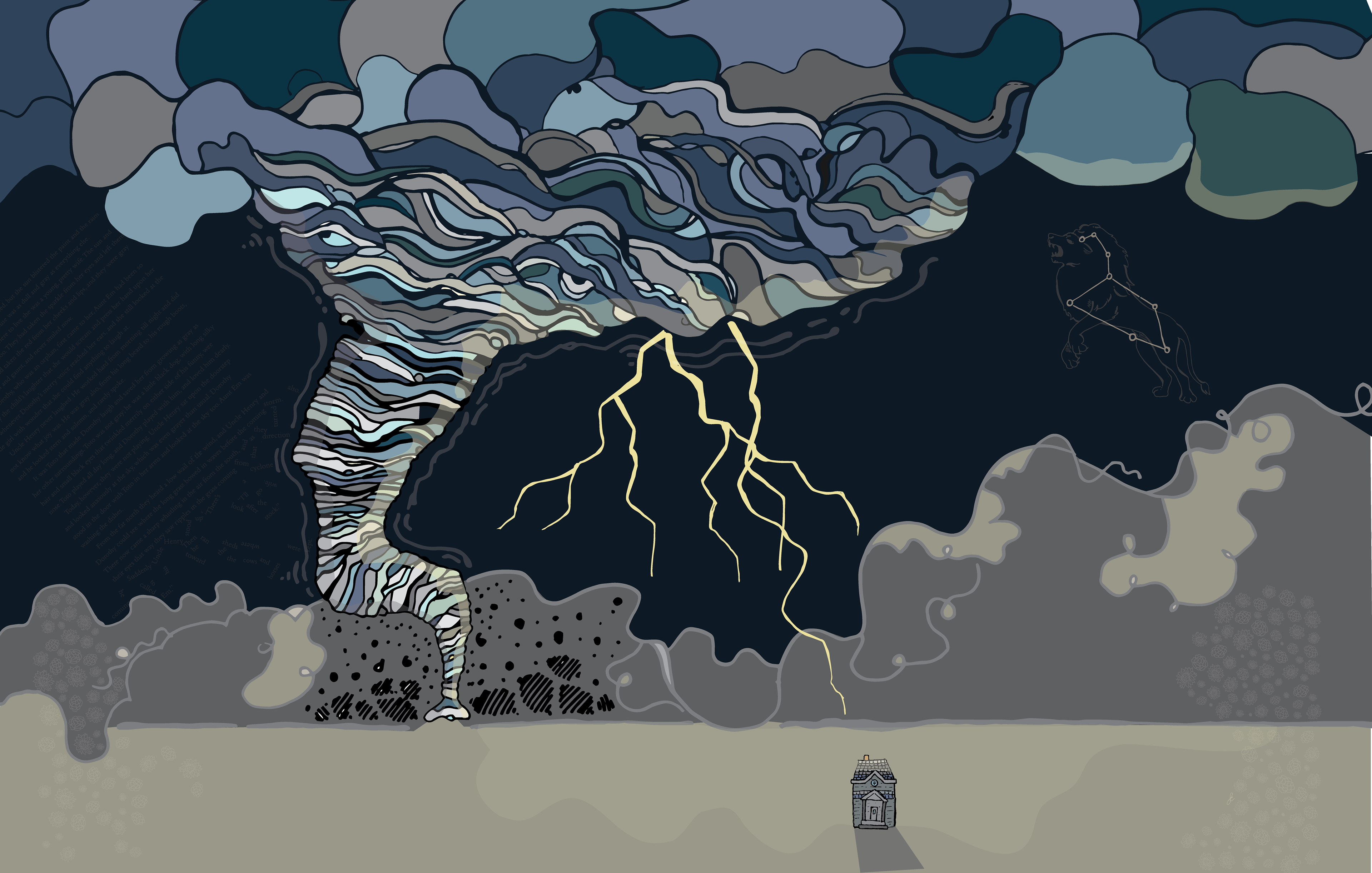
To this day, I have reoccurring nightmares about tornadoes. I am usually sitting in my home, looking out the window, and see the swirling black mass coming towards me from the horizon. I have never actually seen one in person, but the first memory I have of one is from the Wizard of Oz movie. It terrifies me that these ominous, swirling forces could tear apart structures. At the same time, they fascinate me. So maybe I secretly want to see one in person.
*An interesting piece of trivia: in the book, by Frank Baum, the twister is a cyclone not a tornado; Mr. Baum should have done his research in meteorology before writing his book, as there are no cyclones in Kansas!
Dorothy lived in the midst of the great Kansas prairies, with Uncle Henry, who was a farmer, and Aunt Em, who was the farmer’s wife. Their house was small, for the lumber to build it had to be carried by wagon many miles. There were four walls, a floor and a roof, which made one room; and this room contained a rusty looking cookstove, a cupboard for the dishes, a table, three or four chairs, and the beds. Uncle Henry and Aunt Em had a big bed in one corner, and Dorothy a little bed in another corner. There was no garret at all, and no cellar—except a small hole dug in the ground, called a cyclone cellar, where the family could go in case one of those great whirlwinds arose, mighty enough to crush any building in its path. It was reached by a trap door in the middle of the floor, from which a ladder led down into the small, dark hole.
When Dorothy stood in the doorway and looked around, she could see nothing but the great gray prairie on every side. Not a tree nor a house broke the broad sweep of flat country that reached to the edge of the sky in all directions. The sun had baked the plowed land into a gray mass, with little cracks running through it. Even the grass was not green, for the sun had burned the tops of the long blades until they were the same gray color to be seen everywhere. Once the house had been painted, but the sun blistered the paint and the rains washed it away, and now the house was as dull and gray as everything else.
When Aunt Em came there to live she was a young, pretty wife. The sun and wind had changed her, too. They had taken the sparkle from her eyes and left them a sober gray; they had taken the red from her cheeks and lips, and they were gray also. She was thin and gaunt, and never smiled now. When Dorothy, who was an orphan, first came to her, Aunt Em had been so startled by the child’s laughter that she would scream and press her hand upon her heart whenever Dorothy’s merry voice reached her ears; and she still looked at the little girl with wonder that she could find anything to laugh at.
Uncle Henry never laughed. He worked hard from morning till night and did not know what joy was. He was gray also, from his long beard to his rough boots, and he looked stern and solemn, and rarely spoke.
It was Toto that made Dorothy laugh, and saved her from growing as gray as her other surroundings. Toto was not gray; he was a little black dog, with long silky hair and small black eyes that twinkled merrily on either side of his funny, wee nose. Toto played all day long, and Dorothy played with him, and loved him dearly.
Today, however, they were not playing. Uncle Henry sat upon the doorstep and looked anxiously at the sky, which was even grayer than usual. Dorothy stood in the door with Toto in her arms, and looked at the sky too. Aunt Em was washing the dishes.
From the far north they heard a low wail of the wind, and Uncle Henry and Dorothy could see where the long grass bowed in waves before the coming storm. There now came a sharp whistling in the air from the south, and as they turned their eyes that way they saw ripples in the grass coming from that direction also.
Suddenly Uncle Henry stood up.
“There’s a cyclone coming, Em,” he called to his wife. “I’ll go look after the stock.” Then he ran toward the sheds where the cows and horses were kept.
Aunt Em dropped her work and came to the door. One glance told her of the danger close at hand.
“Quick, Dorothy!” she screamed. “Run for the cellar!”
Excerpt of "The Wonderful Wizard of Oz" by L. Frank Baum, 1900.