Storytelling and narration have been foundations in my life, and I never recognized it until recently:
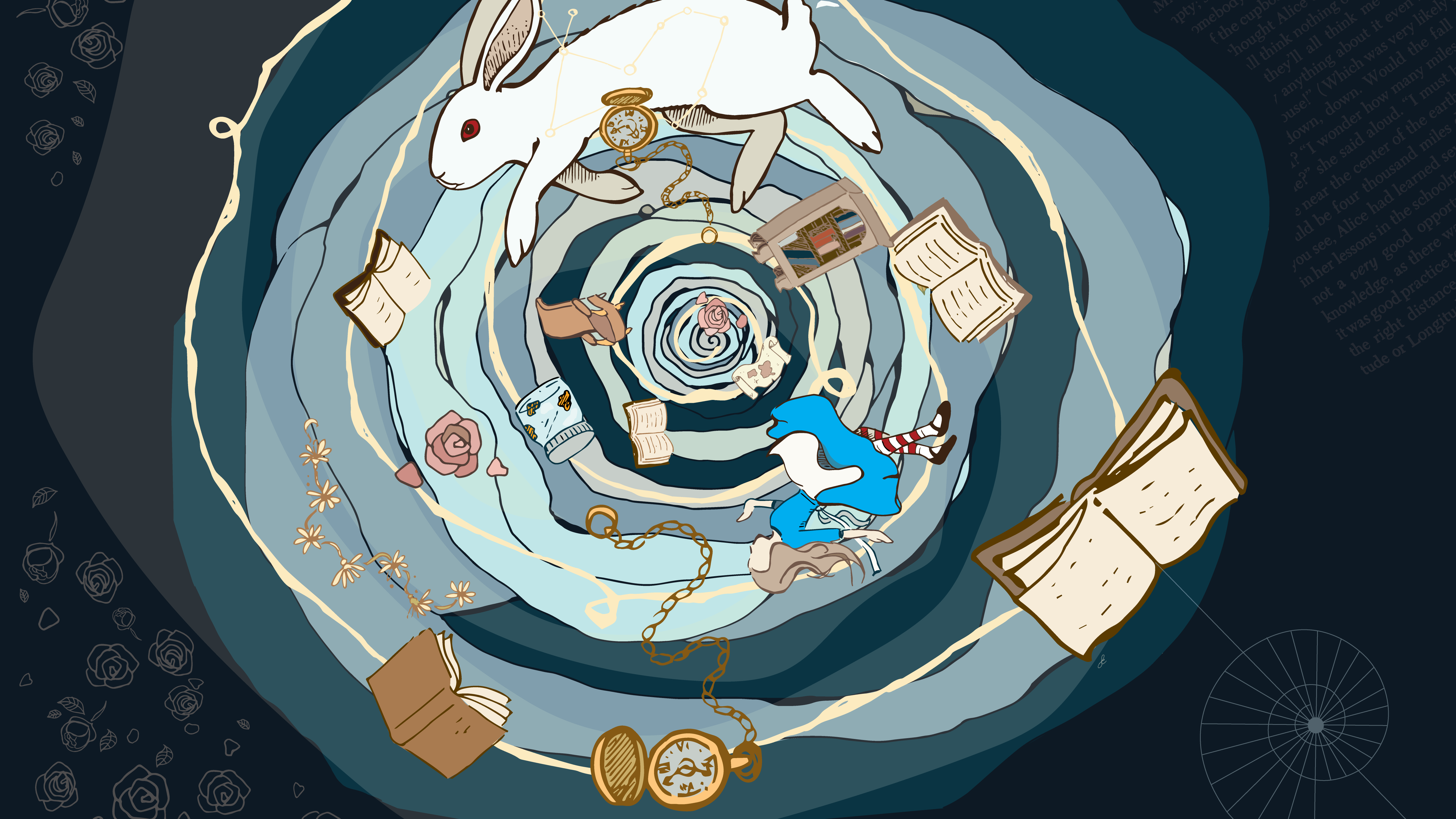
My father used to tell me stories at bedtime. I fell into books like getting sucked into a vortex. I often hid(hide) from reality in the imaginations of my mind. I read books to my kids before bed, and it has become a connection between us as we navigate the lives of fictional characters together.
Like Jonathan Gottschall wrote in the book The Storytelling Animal, How Stories Make Us Human, “Humans live in landscapes of make-believe. We spin fantasies. We devour novels, films, and plays.” The word “devour” makes me think that we need storytelling as much as we need sustenance.
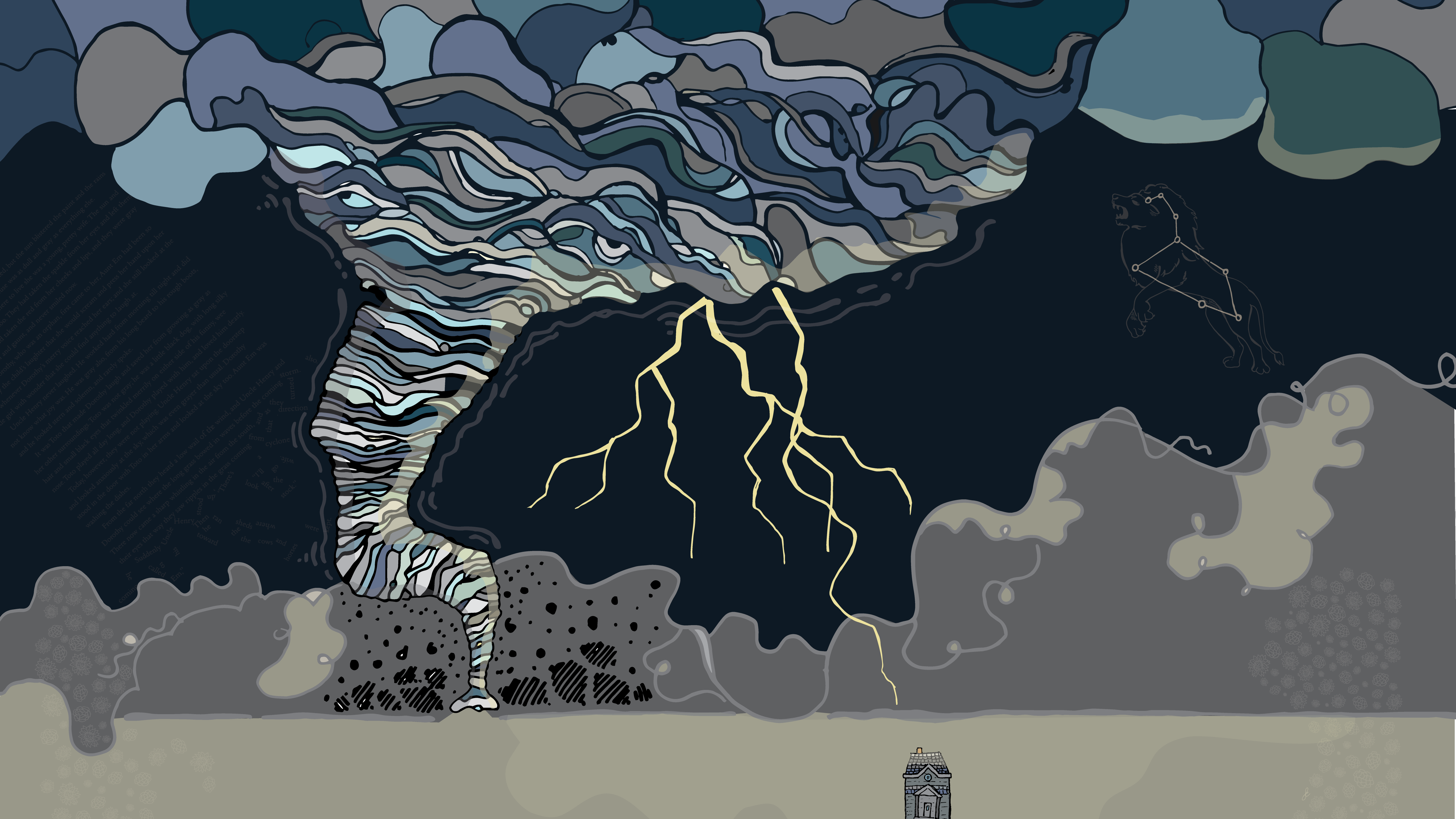
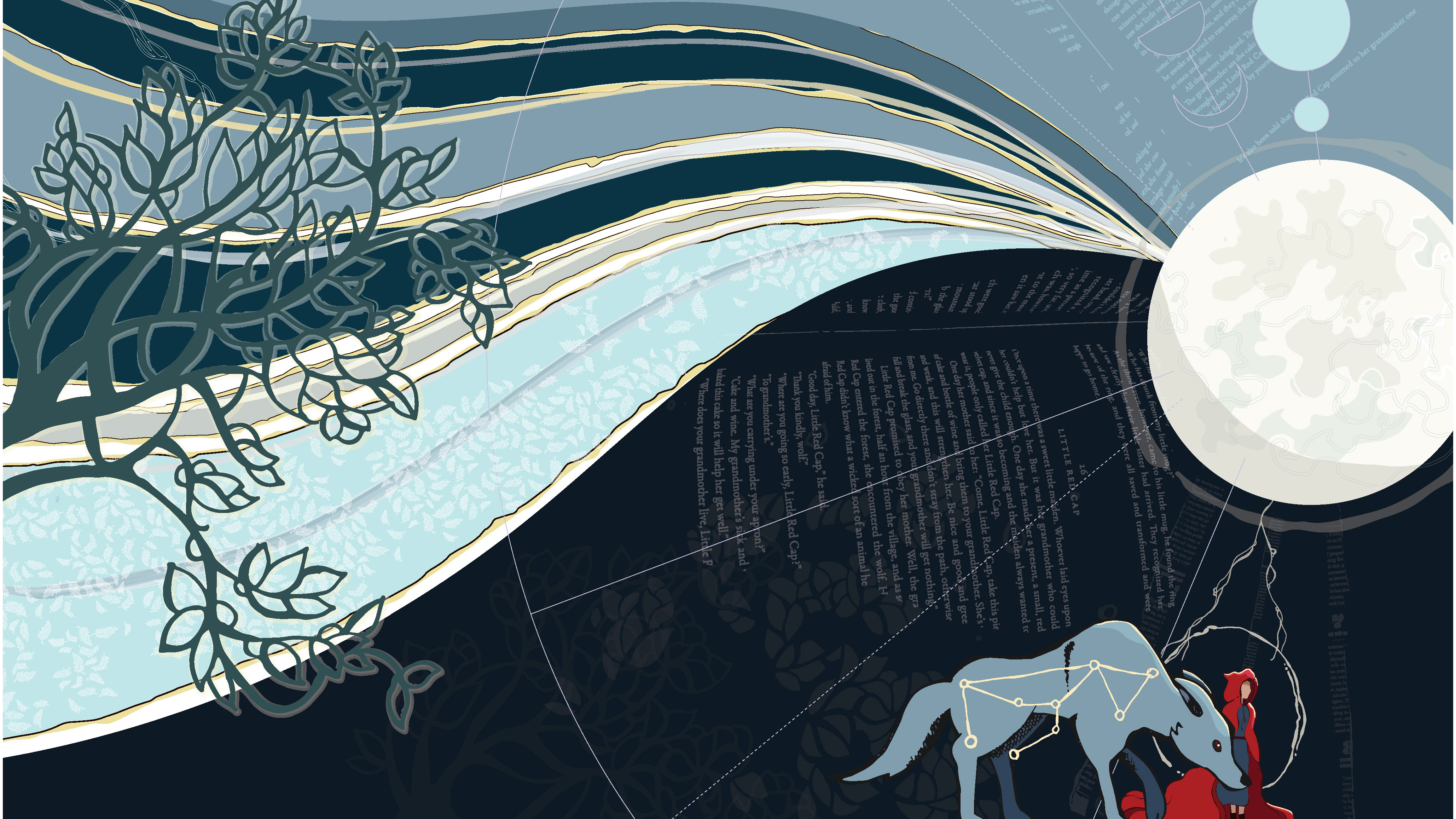
In this art series called “Narrative”, I have chosen 5 stories that stood out to me in childhood, and in my children’s lives as well. Certain imageries which were crafted by words are still in my mind today. They have shaped the way I interpret the world. I hope you enjoy the readings associated with the drawings I have come up with, because the two go hand in hand.
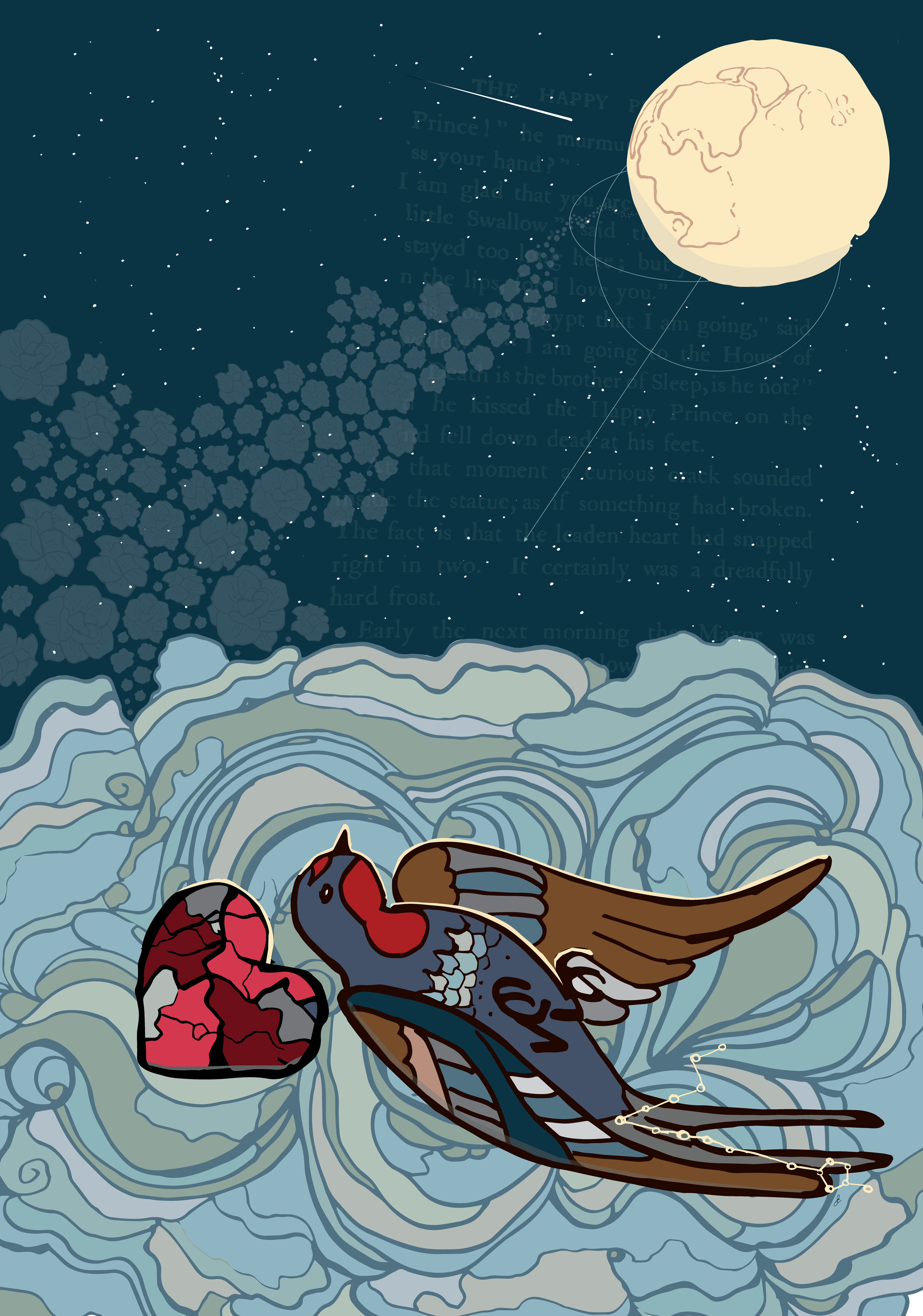
This piece is based on another much-loved book from my childhood, The Happy Prince. I read it over and over because the tragedy was so bittersweet. The swallow was so self-sacrificing, and it made me wonder whether I would ever love another as much as the swallow loved the prince. The symbolism of a dead bird has always reoccurred in my life. It can represent the conclusion of a difficult time, or even a transition into a new phase of life. I always assumed it was a negative omen, but it actually symbolizes renewal. Recently a varied thrush crashed into my window while I was doing work in my office. The poor thing expired immediately. It reminded me of the swallow.
Then the snow came, and after the snow came the frost. The streets looked as if they were made of silver, they were so bright and glistening; long icicles like crystal daggers hung down from the eaves of the houses, everybody went about in furs, and the little boys wore scarlet caps and skated on the ice.
The poor little Swallow grew colder and colder, but he would not leave the Prince, he loved him too well. He picked up crumbs outside the baker’s door when the baker was not looking and tried to keep himself warm by flapping his wings.
But at last he knew that he was going to die. He had just strength to fly up to the Prince’s shoulder once more. “Good-bye, dear Prince!” he murmured, “will you let me kiss your hand?”
“I am glad that you are going to Egypt at last, little Swallow,” said the Prince, “you have stayed too long here; but you must kiss me on the lips, for I love you.”
“It is not to Egypt that I am going,” said the Swallow. “I am going to the House of Death. Death is the brother of Sleep, is he not?”
And he kissed the Happy Prince on the lips, and fell down dead at his feet.
At that moment a curious crack sounded inside the statue, as if something had broken. The fact is that the leaden heart had snapped right in two. It certainly was a dreadfully hard frost.
Early the next morning the Mayor was walking in the square below in company with the Town Councillors. As they passed the column he looked up at the statue: “Dear me! how shabby the Happy Prince looks!” he said.
“How shabby indeed!” cried the Town Councillors, who always agreed with the Mayor; and they went up to look at it.
“The ruby has fallen out of his sword, his eyes are gone, and he is golden no longer,” said the Mayor in fact, “he is little better than a beggar!”
“Little better than a beggar,” said the Town Councillors.
“And here is actually a dead bird at his feet!” continued the Mayor. “We must really issue a proclamation that birds are not to be allowed to die here.” And the Town Clerk made a note of the suggestion.
So they pulled down the statue of the Happy Prince. “As he is no longer beautiful he is no longer useful,” said the Art Professor at the University.
Then they melted the statue in a furnace, and the Mayor held a meeting of the Corporation to decide what was to be done with the metal. “We must have another statue, of course,” he said, “and it shall be a statue of myself.”
“Of myself,” said each of the Town Councillors, and they quarrelled. When I last heard of them they were quarrelling still.
“What a strange thing!” said the overseer of the workmen at the foundry. “This broken lead heart will not melt in the furnace. We must throw it away.” So they threw it on a dust-heap where the dead Swallow was also lying.
“Bring me the two most precious things in the city,” said God to one of His Angels; and the Angel brought Him the leaden heart and the dead bird.
“You have rightly chosen,” said God, “for in my garden of Paradise this little bird shall sing for evermore, and in my city of gold the Happy Prince shall praise me.
Excerpt of "The Happy Prince and Other Tales" by Oscar Wilde,1888.